
Autor: Enrique González García
El avance tecnológico es constante y vertiginoso tanto en nuestra vida personal como en la vida laboral. En odontología, nos podríamos aventurar a decir que la ortodoncia es la rama en la que con mayor rapidez y frecuencia ocurren cambios tecnológicos. Los ortodoncistas estamos conscientes de que el diagnóstico es la parte medular en la que se fundamenta el éxito de nuestros tratamientos. Sin embargo, aunque los ortodoncistas somos los mismos de siempre, los sistemas de diagnóstico han evolucionado de forma considerable y debemos adecuarnos a las ventajas que estos sistemas nos ofrecen.
Shipping From: Spain
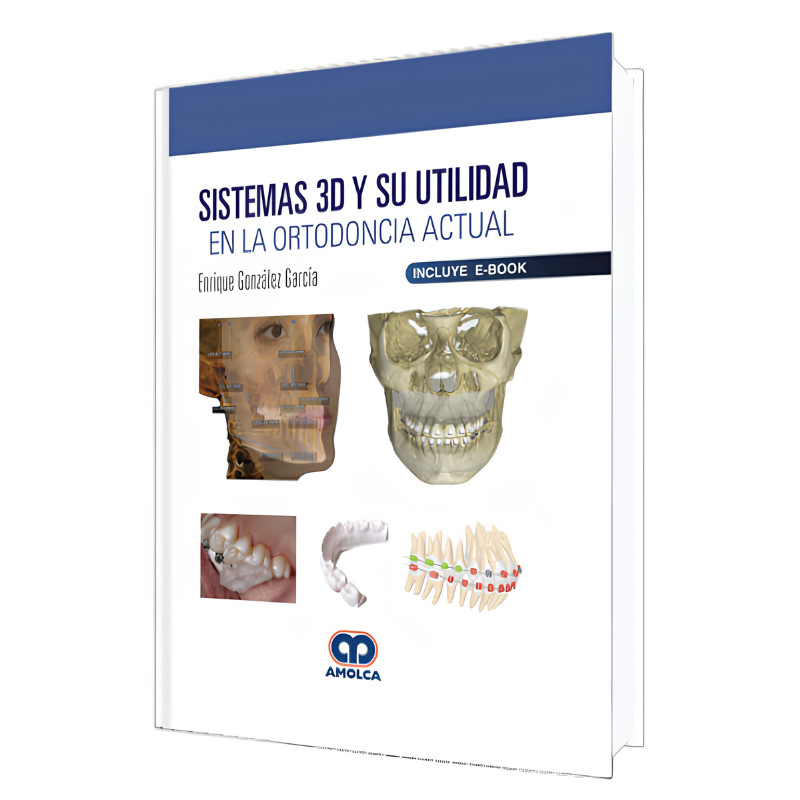
Sistemas 3D y utilidad en la ortodoncia actual pretende mostrar los principales sistemas tridimensionales empezando por el CBCT, el cual ya es utilizado de forma habitual por un gran porcentaje de colegas, pero no en todos los casos se aprovechan completamente los beneficios que esta tecnología puede ofrecer. Se presenta también una propuesta de análisis cefalométrico integral tridimensional (CITEG), el cual permite obtener algunos datos de importancia cefalométrica y principalmente de simetría facial en nuestros pacientes. Asimismo, se muestran los escáners y la impresión de modelos o guías de posicionamiento de brackets, ya sea por parte del mismo doctor o utilizando sistemas de ortodoncia personalizada. La unión de los conocimientos y la experiencia clínica con los avances tecnológicos son una gran oportunidad de crecimiento en nuestra especialidad. Dominar la clínica y la tecnología representa sumar oportunidades en beneficio de lo más importante para cada profesional: nuestros pacientes.
Capítulo 1.- Método de exploración del CBCT en pacientes de ortodoncia
Capítulo 2.- Visualización general
Capítulo 3.- Vías aéreas
Capítulo 4.- ATM
Capítulo 5.- Dientes y estructuras óseas circundantes
Capítulo 6.- Análisis interactivo o dinámico
Capítulo 7.- Sistemas digitales en la ortodoncia actual
Capítulo 8.- Anatomía cefalométrica
Capítulo 9.- Cefalometría integral tridimensional (CITEG)

Data sheet
Specific References
Autor: Enrique González García
El avance tecnológico es constante y vertiginoso tanto en nuestra vida personal como en la vida laboral. En odontología, nos podríamos aventurar a decir que la ortodoncia es la rama en la que con mayor rapidez y frecuencia ocurren cambios tecnológicos. Los ortodoncistas estamos conscientes de que el diagnóstico es la parte medular en la que se fundamenta el éxito de nuestros tratamientos. Sin embargo, aunque los ortodoncistas somos los mismos de siempre, los sistemas de diagnóstico han evolucionado de forma considerable y debemos adecuarnos a las ventajas que estos sistemas nos ofrecen.