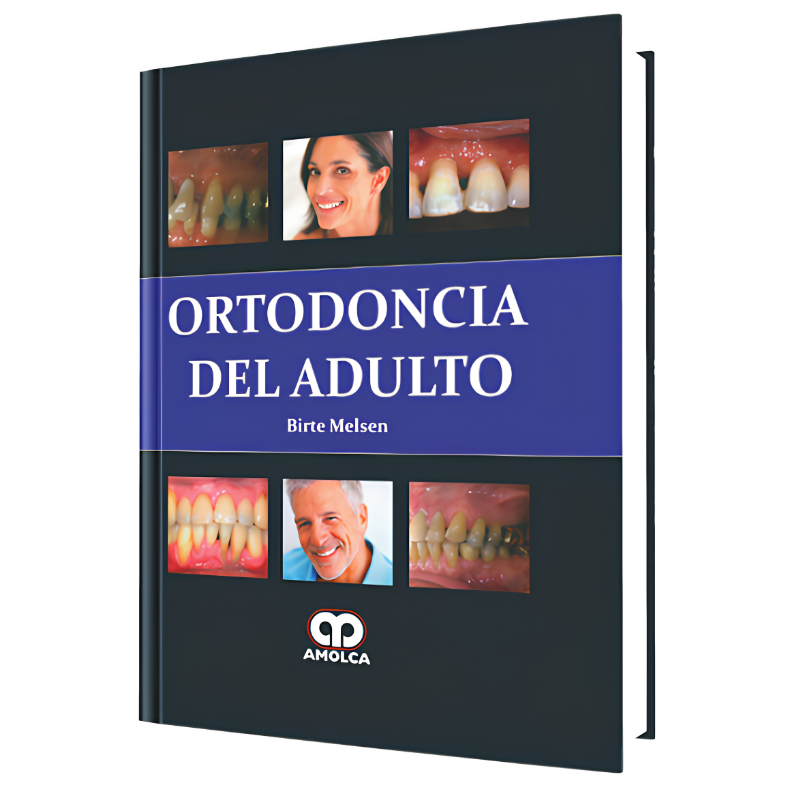

Autor: Birte Melsen
La ortodoncia para adultos no es reciente. Hace más de un siglo, la ortodoncia era considerada una división de la rama protésica por la mayoría de los odontólogos. Los problemas relacionados con la pérdida común de los dientes permanentes debido a caries no controladas, se encontraban entre las quejas principales más frecuentes de los pacientes adultos evaluados para ‘ortodoncia’. La extracción involuntaria de los dientes posteriores durante la juventud permitió la inclinación de los dientes adyacentes en los espacios a lo largo del tiempo.
Shipping From: Spain
Introducción: Más de un Siglo de Progreso en el Tratamiento Ortodóntico en el Adulto
1.- Pacientes Adultos Potenciales para Ortodoncia – ¿Quiénes Son Ellos?
Introducción. - ¿Quiénes son los pacientes?. - ¿Cómo expresan los pacientes sus necesidades?. - La primera visita. - La comunicación con el paciente. - Resumen. - Referencias.
2.- Diagnóstico: Queja Principal y Lista de Problemas
Introducción. - Elaboración de una lista de problemas – la entrevista – la queja principal. - Salud general. - Examen clínico. - Examen extrabucal. - Fotografías extrabucales. - Función del sistema masticatorio. - Análisis intrabucal – salud bucal. - Evaluación de los modelos dentales – forma de la arcada. - Análisis oclusal. -Análisis del espacio. - Análisis cefalométrico. - Lista definitiva de problemas. - Indicación para el tratamiento. - La presentación de la lista de problemas – la punta del iceberg. - Comentarios finales. - Referencias.
3.- Etiología
Introducción. - Base biológica. - Etiología de la maloclusión en los adultos. - Cambios esqueléticos relacionados con la edad. - Cambios en el esqueleto craneofacial relacionados con la edad. - Cambios en el medio local relacionados con la edad. - Consecuencias del deterioro de la dentición. - Reportes de casos. - Conclusión. - Referencias.
4.- Tratamiento Interdisciplinario Versus Tratamiento Multidisciplinario
Tratamiento interdisciplinario o multidisciplinario. - Establecimiento de un equipo interdisciplinario. - Secuencia del tratamiento. - Procedimientos esenciales y opcionales del tratamiento. - Interacción durante el tratamiento. - Tratamiento subsiguiente a la ortodoncia. - Satisfacción del paciente. - Ejemplos de casos interdisciplinarios. - Referencias.
5.- Planificación del Tratamiento: El OTV 3D
Determinación del objetivo del tratamiento. - Producción de un oclusograma. - Combinación del oclusograma con la radiografía cefálica. - El oclusograma computarizado. - En respuesta a las necesidades del paciente. - Tratamiento ortodóntico: ¿arte o ciencia?. - Referencias.
6.- Reacción del Tejido
Efectos ortopédicos. - Efectos ortodónticos en los pacientes adultos. - Referencias.
7.- Diseño del Aparato
Introducción. - Definición del sistema de fuerzas requerido. - Evaluación del anclaje. - Secuencia del tratamiento en fases. - Selección y diseño del aparato. - Mecánica de deslizamiento. - Mecánica segmentada. - Conclusión. - Referencias.
8.- Problemas de Anclaje
Introducción. - Definición. - Clasificación del anclaje. - Anclaje intramaxilar. - Anclaje provisto por el tejido blando. - Anclaje libre. - Anclaje intermaxilar. - Oclusión. - Momento diferencial de aplicación de la fuerza. - Anclaje extraoral. - Anclaje esquelético. - Referencias.
9.- Problemas de Adhesión Relacionados con las Denticiones Rehabilitadas del Adulto
Introducción. - Brackets. - Fundamentos de la adhesión. - Adhesión a coronas y restauraciones. - Descementado. - Reacondicionamiento de los aditamentos de acero inoxidable. - Colocación de bandas. - Aditamentos auxiliares. - Referencias.
10.- Reacciones Adversas Inherentes al Material en Ortodoncia
Introducción. - Aparatos fijos. - Adhesión y materiales para el cementado de bandas. - Aparatos removibles. - Materiales misceláneos. - Comentarios finales. - Referencias.
11.- Pacientes con Problemas Periodontales
Prevalencia de la enfermedad periodontal. - Maloclusión y enfermedad periodontal. - Ortodoncia y enfermedad periodontal. - Indicaciones para el tratamiento ortodóntico en los pacientes con compromiso periodontal. - Tratamiento de pacientes con incisivos superiores en labioversión y extruidos. - Reacción del tejido a la intrusión de dientes con pérdida ósea horizontal. - Tratamiento de pacientes con defectos óseos verticales. - ¿Cuáles son los límites periodontales para el movimiento dental ortodóntico?. - Secuencia del tratamiento en los pacientes con compromiso periodontal. - Conclusión con respecto a la influencia del tratamiento ortodóntico en el estado periodontal. - Referencias.
12.- Un abordaje Sistemático al Tratamiento Ortodóntico de los Dientes Anteriores con Compromiso Periodontal
Retracción gingival en un solo diente. - Espaciamiento progresivo de los incisivos. - Reportes de casos. - Manejo de los dientes con compromiso periodontal. - Referencias.
13.- Colaboración Interdisciplinaria Entre Ortodoncia y Periodoncia
Introducción. - Diagnóstico periodontal. - Elaboración de la historia, examen clínico y radiográfico. - Detección de la enfermedad periodontal. - Factores locales que predisponen a la terapia periodontal. - Momento del tratamiento ortodoncia periodoncia. - Terapia periodontal. - Terapia quirúrgica. - Cirugía mucogingival y estética. - Tratamiento con cirugía regenerativa. - Tratamiento periodontal de soporte. - Casos clínicos ortodoncia-periodoncia y multidisciplinarios. - Conclusión. - Referencias.
14.- El Vínculo Entre Ortodoncia y Prótesis
Introducción. - Edentulismo y manejo del espacio: la dimensión mesiodistal. - La dimensión vertical. - Técnica de extrusión ortodóntica. - Ortodoncia, enfermedad periodontal y ferulización protésica. - Conclusión. - Reconocimientos. - Referencias.
15.- Pacientes con Problemas de la Articulación Temporomandibular (ATM)
Ortodoncia y disfunción. - Controversia en la literatura con relación a la DTM y la oclusión. - Tratamiento y DTM. - Tratamiento de los chasquidos articulares. - Tratamiento ortodóntico de pacientes con DTM. - Organización del tratamiento. - Conclusión. - Referencias.
16.- Pacientes con Trastornos Temporomandibulares
Introducción. - Clasificación y epidemiología. - Procedimientos diagnósticos. - Factores de riesgo y etiología. - Fisiopatología. - Manejo. - Resumen. - Referencias.
17.- Invisalign®: Tantas Respuestas Como Preguntas
¿Es Invisalign® nuevo? - ¿Cómo funciona Invisalign? - ¿Cuáles son las consideraciones pretratamiento? - ¿Cómo difiere el Sistema Invisalign de la ortodoncia convencional? - ¿Qué caracteriza a los pacientes que solicitan el tratamiento con Invisalign? - ¿Cuál es el abordaje más favorable para resolver el apiñamiento en los pacientes tratados con Invisalign? - ¿Cómo pueden evaluarse las alternativas a la REI? - ¿Cuáles son los problemas relacionados con la resolución del apiñamiento? - ¿Cuándo se indican las extracciones? - ¿Difiere el plan de tratamiento con Invisalign de un plan de tratamiento ortodóntico regular? - ¿Cómo se toma una impresión adecuada para el sistema Invisalign? - ¿Qué se requiere para la evaluación con ClinCheck®? - ¿De qué material están hechos los alineadores? - ¿Qué son los ataches del alineador? - ¿Cómo se fabrican los ataches en los dientes? - ¿Qué debe controlarse después de la inserción de los alineadores? - ¿Cuáles son las consecuencias del buen o mal adaptado del alineador? - ¿Qué ocurre si se pierde un alineador? - ¿Qué puede hacerse si una discrepancia severa entre ClinCheck® y la situación clínica se hace evidente durante el tratamiento? - ¿Qué puede hacerse si una discrepancia leve entre ClinCheck® y la situación clínica se hace evidente al final del tratamiento? - ¿Cómo pueden evitarse las complicaciones durante el tratamiento con el sistema Invisalign? - Referencias.
18.- Técnica de Desgaste Interproximal Progresivo
Definición y objetivos. - Justificación antropológica del desgaste interproximal. - Influencia del desgaste proximal en la placa dental, caries y enfermedad periodontal Indicaciones. - Contraindicaciones. - Ventajas del desgaste interproximal. - ¿Qué cantidad de esmalte puede ser desgastado?. - Consideraciones especiales. - Instrumento para el desgaste interproximal. - Técnica de desgaste interproximal progresivo. - Reportes de casos. - Referencias.
19.- Mantenimiento Postratamiento
¿Estabilidad?. - Mantenimiento biológico. - Mantenimiento mecánico – retención. - Retención intermaxilar. - Placas de retención activa. - Conclusión. - Referencias.
20.- ¿Cuáles son los Límites del Tratamiento Ortodóntico?
¿Qué determina los límites? - Referencias. - Índice.

Data sheet
Specific References
Autor: Birte Melsen
La ortodoncia para adultos no es reciente. Hace más de un siglo, la ortodoncia era considerada una división de la rama protésica por la mayoría de los odontólogos. Los problemas relacionados con la pérdida común de los dientes permanentes debido a caries no controladas, se encontraban entre las quejas principales más frecuentes de los pacientes adultos evaluados para ‘ortodoncia’. La extracción involuntaria de los dientes posteriores durante la juventud permitió la inclinación de los dientes adyacentes en los espacios a lo largo del tiempo.