- New
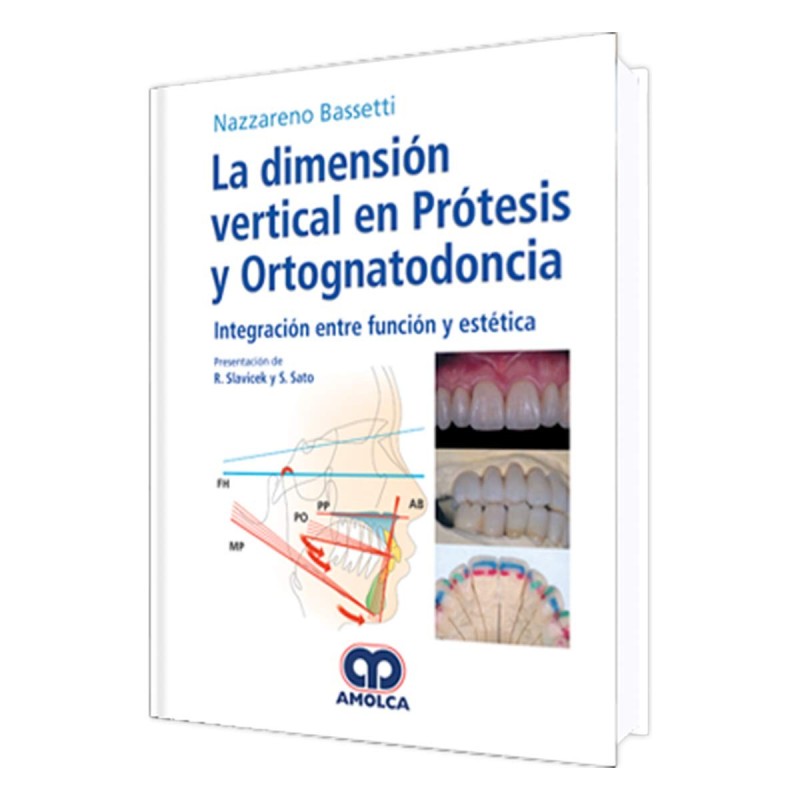

Author: Nazzareno Bassetti
The vertical dimension in prosthetics and orthognathodontics - integration between function and aesthetics. The most frequent risk in complex rehabilitations is that the aesthetic evaluation prevail over the function. The objective of this book is to describe a handling course of the vertical dimension in which the optimal restoration of the function matches the aesthetic result. The vertical dimension is fundamentally for the appropriate reconstruction of occlusion and, therefore, for rehabilitation related to the entire stomatognathic system.
Shipping From: Spain
The book proposes, in a simple and practical way, the key concepts of the philosophy of Prof. Slavicek and the Prof.Sato, cross-cutting to all rehabilitational branches of dentistry, from the prosthesis removable to the fixed prosthesis, of implant-prosthetic to orthodontics, both that relative to evolutionary age and that carried out in Adult patients.
Chapter 1.- Transversality of Gnatological Principles
Introduction. Think gnatologically. Classification of the patient for a standard diagnosis. Reduction and evaluation of therapeutic risks. Main requests of the patient. Search for signs and symptoms of cranocervicomandibular dysfunction (DCCM). How to intervene?
Chapter 2.- Gnatological, Analog and Digital Diagnostic Flow
Introduction. Clinical and instrumental analysis 1. From the printing to the diagnostic model. Facial bow and assembly in the articulator of the upper model. Reference wax and articulator assembly of the lower model. Photographic documentation of the patient and the models. Radiographic examinations LL, AP, orthopanoramic. Occlusal analysis of paraffers: Brux Checker. Analysis of the CPM and CPV mandibular position. Interview with the patient: Initial diagnosis. Clinical and instrumental analysis 2. Gnatological table. Record of the mandibular dynamics with electronic condyography (CADIAX® system). Condylograph components. Clutch Paracoclus. Articular dynamics record. Classification of condylographic paths. Final evaluation, diagnosis, treatment plan. Diagnosis. Treatment plan.
Chapter 3.- Macroesthetics of the face linked to the mandibular position
Introduction. Cybernetic system. Dental and facial aesthetic canons. Aesthetics and underlying structure. Skeletal classifications. Cadena drawn® in LL. Cefalometric points on the LL layout. Skeletal points. Dental points. Cutaneous points. Plans and cephalometric lines. Locked in the anoposterior. Cefalometric analysis. Vertical analysis. Sagittal analysis of the skeletal class. Dental analysis: incisors. Dynamic Analysis: Angle of desocclusion. Aesthetics and functions of incisors. Superior incisors Lower incisors. Vertical dimension and incisors.
Chapter 4.- Occlusal plane
Introduction. Occlusal plane and craniofacial development. Normal growth. Development Class II. Class III development. Development of a lateral deviation of the jaw. Concept of rear discrepancy according to SATO. Germectomy of the eighths. Occlusal plans. Correlation between PO and ATM. Compensation mechanisms.
Chapter 5.- Occusal Concepts
Introduction. Development of dentition. Postnatal period. Period of complete deciduous dentition. First period of mixed dentition. Second period of mixed dentition. Permanent medium dentition period. Functional arches and structure of the arcades. Functional areas of the arcades.
Chapter 6.- Project of the vertical dimension according to the School of Vienna
Introduction. Digital Functional Smile Design (DFSD). Three-dimensional handling of the vertical dimension. Variation of the DV in rotation and rototralation. Variation of the dental, skeletal class and the inclination of incisors and the PO. Concepts of Gnatologically Guided Implantology.
Chapter 7.- Oclusomandibular OMRT repositioning technique (Bassetti)
Introduction. Concept of Reference Position (RP) and therapeutic Reference Position (TRP). Functional space and vertical dimension. Management of the occlusal plane and the vertical dimension in the mandibular repositioning. Role of the upper and lower room in the mandibular repositioning. Oclusupandibular repositioning bite. Provisional therapeutic prosthesis. Using the CPV in the rearning technique. Of the provisional therapeutics at the end of the cases. Orthognathodontics of rehabilitation with MEAW technique (SATO). Early mandibular repositioning technique (EMRT).
Chapter 8.- The Ten Key Points of the Treatment Plan
Introduction. 1.- Eliminate subsequent discrepancy. 2.- Control of the vertical dimension. 3.- Create later support. 4.- Correlation between tilt of the PO and SCI. 5.- Sequential occlusion (Class I, II, III and crusade bite). 6.- Correlation between incisors and SCI, incisive control. 7.- Correlation between Canino and SCI, laterotrusive and protrusive control. 8.- Correlation between Molar, Premolar and SCI. 9.- Retrusive control of the Sixth Superior. 10.- Retrusive control, protrusive guide and protrusive control of the first higher and lower premolars.
Clinical cases Introduction. Clinical case 1. Clinical case 2. Clinical case 3. Bibliography.

Data sheet
Specific References
Author: Nazzareno Bassetti
The vertical dimension in prosthetics and orthognathodontics - integration between function and aesthetics. The most frequent risk in complex rehabilitations is that the aesthetic evaluation prevail over the function. The objective of this book is to describe a handling course of the vertical dimension in which the optimal restoration of the function matches the aesthetic result. The vertical dimension is fundamentally for the appropriate reconstruction of occlusion and, therefore, for rehabilitation related to the entire stomatognathic system.