- New
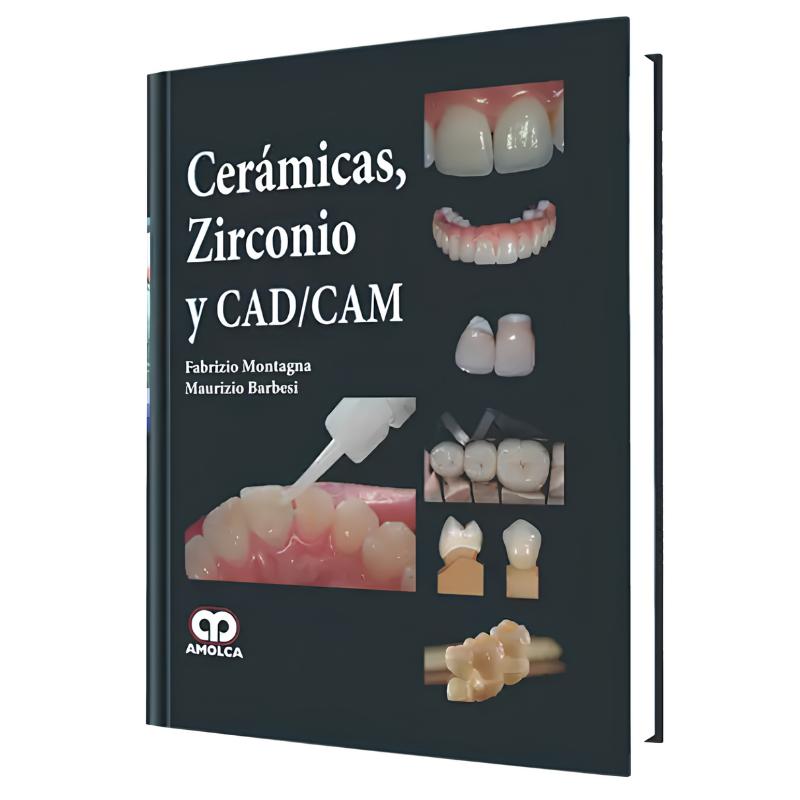

Author: Fabrizio Montagna
The introduction of CAD / CAM in prostheses is a non-receptation computing revolution whose dawn go back to the 80s of the last century, but that it is currently being imposed as an inescapable progress, which requires, long before an effort in praxis Labor, of a radical change of mentality.
Shipping From: Spain
A. Science of dental materials
1. History of dentistry
Integral ceramics. CAD / CAM systems.
2. Structure of the subject
Atomic links. Classification of solids. Structure of the solids. Crystal solids. Ductile and fragile fracture. Glass. Composition. Properties. Critical defects and resistance. Mild. Silicates
3. Ceramic materials
Industrial and handmade ceramics. Dental ceramics. Methods of production of the feldespatic ceramics. Zirconium production methods. - Manufacture of dust. - Production of raw blocks. - Considerations. Methods of elaboration. Clinical case No. 1. Clinical case No. 2.
4. Sintering
Kinetics and models. Mechanisms. Viscose sintering. Sintering with liquid phase. Reactive sintering. Solid body sintering. Sinterization of dental ceramics. Zirconium. Vitrocerámicas. Feldespatic porcelains. - Initial drying in the decomposition of the materials (100 to 450 ° C). - Transformation of the components (450 to 700 ° C). - Vitreous transition temperature and sintering (700 to 850 ° C).
5. Mechanical properties
Resistance tests. Compression, traction and cutting. Bending. Resistance and Weibull module. Tenacity.
6. Fracture mechanics
Quantitative study Critical defects and spread of cracks. Fracture mechanisms. Thermal treatments. Balance between the loads. Modeling. Mechanical properties. Fractografía.
7. Tenacity
Mechanisms. Reinforcement with crystallitas. Microgrietas. Tenacity for phase transformation in zirconium. Other mechanisms.
8. Physical and biological properties
Physical properties. Microdureza. Elasticity. Surface energy Erosionabilidad. Electrical conductivity. Thermal properties. Conductivity and thermal diffusivity. Melting point, CET. Biological properties. Biocompatibility. Radioactivity.
9. Aesthetic properties
Color. Type of ceramics. Metamerismo. Translucency. Diffusion. Depth. Defects. Framework effect. Opalescence. Diffraction, interference and dispersion. Opalescence and counteropalescence of denture. Fluorescence. Luminosity
10. Comprehensive ceramic systems
Feldespatic ceramics. Hob. Leucitas. Lithium dysilicate. Nanofluorapatita. Alumni ceramics of vitreous infiltration. Pure alumina.
11. zirconium
Mineralogical properties. Stabilization of the tetragonal phase. Zirconium systems. Properties of zirconium stabilized with yttrium. Basic materials. Zirconium in green state. Hip zirconia Presinterized zirconium. Effect of treatments. Milling Cam. Manual finish Sand bath Sintering. Regeneration cooking. Considerations. Tips for sintering. Tips for surface finish. Case 1. Case 2. Case 3. Case 4. Case 5. Case 6.
12. Aging and degradation
Effects of occlusal load. Silhiece ceramics. Stress by corrosion. Ceramics with aluminous base. Zirconium. - Low temperature degradation (degradation at low temperature). Control of the LTD and doping.
B. Laboratory technique
1. Planning of structures
Selection of materials. Sizing. Effort. Thickness of the skeletons. Thickness of the copies. Considerations. Skeleton morphology. Clinical case
2. CAD-CAM technology
Logical modules of the virtual environment. Systems and workflows. Advantages. Computer piracy. Clinical case
3. Scanner and optical printing
Types of scanner. - Contact scanner. - Laser scanner. - Structured light scanner. Operation. Minucity and precision of intraoral optical scanners. Topometric techniques. Intraoral scanners. - Cerec AC. - Itro. - E4. - Lava Chairside Oral Scanner (C.O.S.). - IOS Fast Scan. - DPI-3D. - 3D Progress. - Other intraoral scanners. Intraoral optical printing. Laboratory scanners. Clinical case
4. CAD, CAM and milling machine or lathe
Computer Added Design. Cad dental. Computer Added Manufacturing. Milling parameters. Milling strategies in dentistry. Transfer of information to the Utensil machine. Milling machines or lathes. Dental milling machines. Milling or turning. Strawberries. Types of work Defects in the milling.
5. Ceramics of aesthetic coating
Systems and resistance. Fracture mechanisms. Sintering. Compression by sintering. Link between Veneer and Core. Liner for zirconium. Finish. Clinical cases Clinical case No. 1. Clinical case No. 2.
6. Ceramic stratification on zirconium
Infiltration and paint. Stratification of veneers. Stratification. Clinical case No. 1. 7. PreTau Bridge Production types. Stages of work with pantographic milling machine. Clinical case no. 1. Clinical case does not. 2. Clinical case does not. 3. Clinical case No. 4. Clinical case No. 5. Clinical case No. 6. Clinical case No. 7. Clinical case does not. 8. Clinical case does not. 9. Clinical case does not. 10. Clinical case does not. 11. Clinical case does not. 12. Clinical case does not. 13. Clinical case does not. 14. Clinical case does not. 15.
C. Clinical Procedures
1. Complete crowns
Resistance factors. Preparation. Clinical case No. 1. Clinical case No. 2. Clinical case No. 3. Clinical case No. 4.
2. Inlays and partial crowns
Preparation. Clinical case No. 1. Clinical case No. 3. Clinical case No. 4.
3. Veneers
Preparation. Clinical case No. 1. Clinical case No. 2. Clinical case No. 3. Clinical case No. 4. Clinical case No. 5. Clinical case No. 6. Clinical case No. 7.
4. Compound cements
Adherence to the tooth. Adhesive systems. ETCH AND RINSE SYSTEMS. SELF-ETCH SYSTEMS. Adherence to ceramics. Type of adhesion Silane. Resinous cementations. Classification. Self-adhesive cements. Degradation of composite resins. Prevention.
5. Cemented
Types of cemented. Silhiece ceramics. Recorded. Ceramic oxide with aluminous base. Zirconium. Clinical case
6. Efficiency
Marginal precision. Survival. Scale. Veneers. Individual crowns. Fixed partial prosthesis in metalceramic. Fixed partial prosthesis in integral ceramic.
Bibliografí.

Data sheet
Specific References
Author: Fabrizio Montagna
The introduction of CAD / CAM in prostheses is a non-receptation computing revolution whose dawn go back to the 80s of the last century, but that it is currently being imposed as an inescapable progress, which requires, long before an effort in praxis Labor, of a radical change of mentality.