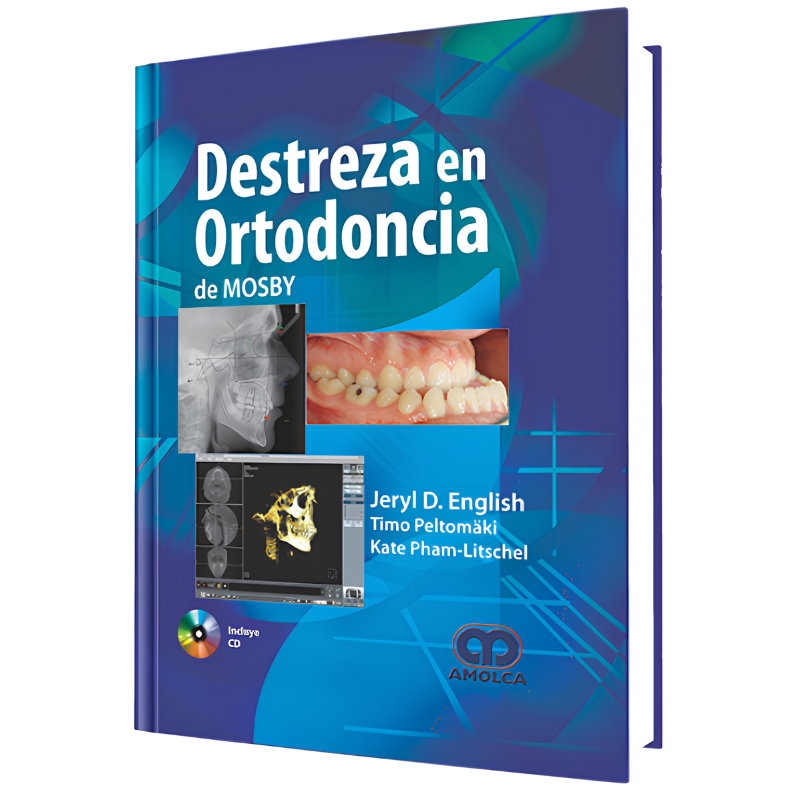

Autor: Jeryl D. English
Puesto que el ámbito de la ortodoncia cambia continuamente, hace necesario el conocimiento tanto para el estudiante como para el profesional en ejercicio. La ortodoncia es una práctica conducida clínicamente, con el modelo tutorial empleado en los estudios de casos que constituye una de las mejores maneras de aprendizaje.
Shipping From: Spain
Destreza en Ortodoncia de Mosby no solamente busca responder a las preguntas, sino también proporcionar al lector del conocimiento y la destreza clínica para alcanzar los resultados acertados para el paciente. El lector debe entender que no hay «secretos» para hacer la ortodoncia fácil. La maloclusión se presenta como una complejidad de problemas en tres tejidos y en tres dimensiones.
1.- Crecimiento y desarrollo craneofacial.
2.- Desarrollo de la oclusión.
3.- Momento apropiado para el tratamiento ortodóntico.
4.- Registros ortodónticos y evaluación del caso.
5.- Imagenología tridimensional en ortodoncia.
6.- Diagnóstico de los problemas ortodónticos.
7.- Aparatos ortodónticos.
8.- Biomecánica en ortodoncia.
9.- Planificación del tratamiento.
10.- Tácticas de tratamiento para los problemas relacionados con las discrepancias dentofaciales en los tres planos del espacio.
11.- Fase I: tratamiento temprano.
12.- El sistema invisalign.
13.- Tratamiento de las maloclusiones clase II.
14.- Correctores de clase III.
15.- Movimiento dentario menor.
16.- Fase II: casos no quirúrgicos del adolescente y del adulto.
17.- Tratamiento ortodóntico interdisciplinario del adulto.
18.- Implantes en ortodoncia.
19.- Minitornillos e implantes palatinos para el anclaje ortodóntico.
20.- Higiene oral: problemas y complicaciones posibles.
21.- Ortodoncia y deformidades craneofaciales.
22.- Trastornos temporomandibulares.
23.- Retención en ortodoncia.
24.- Cirugía del tejido blando con láser de diodo en ortodoncia.
25.- Secretos en la simulación quirúrgica asistida por computadora para la cirugía del complejo craneomaxilofacial.

Data sheet
Specific References
Autor: Jeryl D. English
Puesto que el ámbito de la ortodoncia cambia continuamente, hace necesario el conocimiento tanto para el estudiante como para el profesional en ejercicio. La ortodoncia es una práctica conducida clínicamente, con el modelo tutorial empleado en los estudios de casos que constituye una de las mejores maneras de aprendizaje.