- New
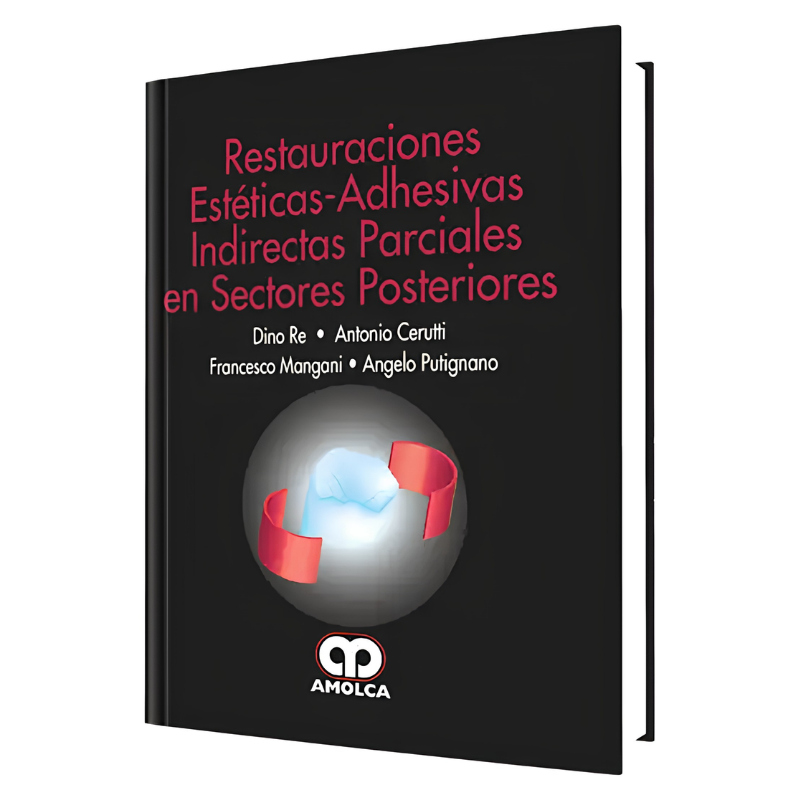

Authors: Antonio Cerutti, Dino Dino re
The morphofunctional recovery of the dental pieces in the posterior sectors was entrusted mainly to direct restorations in silver amalgam. The most refined solutions provided for indirect restorations in gold and in cases where the destruction of the detartion would have been important, total crowns in noble metal, coated in resin or ceramics, as long as the Aesthetic demands The obligation that these products were retained through cemented and friction mechanism forced the dentist to very invasive preparations and destroying for the dental piece.
Shipping From: Spain
Chapter 1.- Criking of selection of aesthetic restorations
Factors related to dental parts. Factors related to restoration. Factors related to the patient.
Chapter 2.- The materials used in indirect restorative techniques
Ceramics. General characteristics. Composed resins. Polycarbonates. Vitreous polymers.
Chapter 3.- The Cavitarian Preparation
Principles of cavitary preparation. Cavitarian geometry in the vital and devitalized tooth. Operative phases Conclusions.
Chapter 4.- The impressions
Printing materials Techniques for impressions. Clinical procedures
Chapter 5.- Laboratory procedures
Inlaid in composite resin: The model CEAST CERRUSTATIONS; The master model.
Chapter 6.- Principles and methodologies of Amelodent Field
Physical-chemical bases. Dental substrates. Adherence to tempting tissues. The role of water. Adherence to restoration materials. Stress by polymerization.
Chapter 7.- Cemented Procedures
Cementes of glass ionomer. Resinous cementations. Mechanical properties of resinos cements. Factors that influence mechanical properties. Factors that influence the selection of cement. Cemented procedures.
Chapter 8.- Finishing and Polishing Procedures
Instrument for finishing. Instrumental for polishing. Maintenance. Clinical results at a distance. Evaluation criteria Conclusions.
Chapter 9.- The indirect type adhesive tooth of the treated tooth endodontically treated
Morphological alterations of dental substrates after the biomechanical endodontic treatment of the treated tooth endodontically
Clinical case 1: Presence and thickness of the residual walls of the cerclage or iron effect elongation of the clinical crown and / or orthodontic extrusion TECHNICALS Post-Endodontic Restorative Traditional
Clinical case 2: Advantages of technical adhesive techniques for direct restoration Advantages and disadvantages of the indirect technique with respect to the technical direct technique for indirect restoration Advantages and disadvantages of indirect conservative technique with respect to traditional prosthesis
Clinical case 3: Indications for the use of endodontic bolts Strategy for the use of endodontic bolts.
Chapter 10.- Future Perspectives on Indirect Adhesive Aesthetic Restorations
Contacts on Embeds Clinical Considerations Clinical Case 1: Clinical Cases 2 Clinical Case 3: Clinical Evaluation at CAD / CAM Technology for Inclustations Analytical Index.

Data sheet
Specific References
Authors: Antonio Cerutti, Dino Dino re
The morphofunctional recovery of the dental pieces in the posterior sectors was entrusted mainly to direct restorations in silver amalgam. The most refined solutions provided for indirect restorations in gold and in cases where the destruction of the detartion would have been important, total crowns in noble metal, coated in resin or ceramics, as long as the Aesthetic demands The obligation that these products were retained through cemented and friction mechanism forced the dentist to very invasive preparations and destroying for the dental piece.