- New
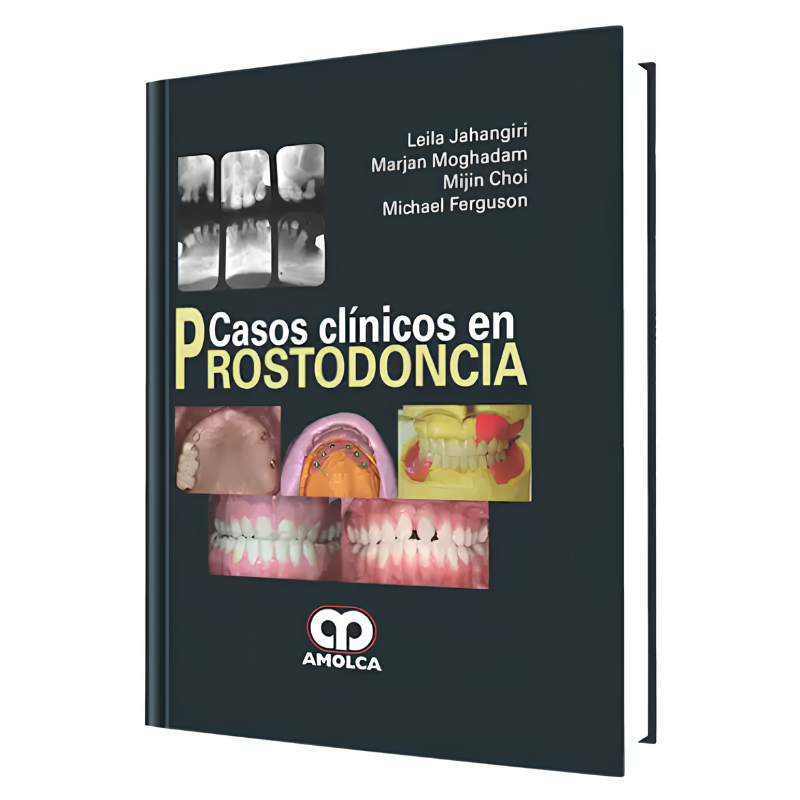

Author: Leila Jahangiri
Two experienced clinical professionals are discussing a case. After listening to the treatment plan, one of the professionals says: "I would not have solved it that way." The other clinician responds explaining that the pattern of treatment is based on critical decision-making factors, which are settled in the trial and experience. The argument would be strengthened if it was supported by the best possible evidence at each step of the decision-making process. Many clinicians rely on the evidence observed through the many years of practice.
Shipping From: Spain
Although the decisions made in this way are valid, clinical professionals can increase and improve their knowledge if, likewise, they investigate the literature to observe what colleagues report in similar cases. This will invariably confirm and in some cases it will even modify the vision of what must be done. For the active clinical professional this process is described as teaching over time. The combination of experience with a strong justification, based on the best evidence available in literature, raises the process of planning treatment of a purely personal selection (subjective), a professional collective selection (objective).
Introduction to the practice based on evidence.
Case 1.- Treatment of an edentulus patient with conventional dental prostheses.
Case 2.- Treatment of a temporary patient with mandibular overdenting retained by two implants.
Case 3.- Treatment of a patient with combination syndrome.
Case 4.- Treatment of a temporary patient with severe atrophy of the lower jaw.
Case 5.- Management of Florida Cement-Bone (FCOD) dysplasia.
Case 6.- Treatment of a partially edentulous patient with removable partial prosthesis retained with implants.
Case 7.- Treatment of a partially edentulous patient with fixed and removable prostheses.
Case 8.- Management of ectodermal dysplasia I - Overdress.
Case 9.- Management of ectodermic dysplasia II - Removable prosthesis retained by implants.
Case 10.- Management of ectodermic dysplasia III - Multidisciplinary approach.
Case 11.- Management of a fractured central incisive i - mild.
Case 12.- Management of a fractured central incisor II - moderate.
Case 13.- Management of a fractured central incisor III - severe.
Case 14.- Rehabilitation of previous teeth i - combination of total and partial coating restorations.
Case 15.- Rehabilitation of anterior teeth II - Restorations of partial coating.
Case 16.- Rehabilitation of anterior teeth that need orthodontic extrusion.
Case 17.- Management of severe crowding - Multidisciplinary approach.
Case 18.- Management of a patient with transposition of a higher canine.
Case 19.- Management of a patient with loss of subsequent support.
Case 20.- Management of the consequences of partial edentulism.
Case 21.- Management of wear wear I - Result of dental malocclusion.
Case 22.- Handling of dental wear II- wear Severe dental dental.
Case 23.- Management of dental wear III - Severe widespread dental wear.
Case 24.- Therapy Implement versus Endodontic Therapy.
Case 25.- Management of a treated tooth endodontically.
Case 26.- Indicators of the forecast for strategic extractions in total oral rehabilitation.
Case 27.- Treatment of a patient with total fixed prosthesis implantosorted.
Case 28.- Complete oral rehabilitation - Implantosorted Prosthesis I.
Case 29.- Complete oral rehabilitation - Implantosorted Prosthesis II.
Case 30.- Complete oral rehabilitation - Implantosorted prosthesis, screwed prostheses.
Case 31.- Complete oral rehabilitation - Implantosported, cemented prosthesis.
Case 32.- Complete oral rehabilitation - combination of implant and fixed prosthetic prosthesis.
Case 33.- Complete oral rehabilitation - combination of implant and fixed and removable prosthetic prosthesis.
Case 34.- Management of a bulimic patient.
Case 35.- Management of oral manifestations for methamphetamine abuse.
Case 36.- Management of Cleidocranial Dysplasia I - Treatment of a teenage patient.
Case 37.- Management of Cleidocranial Dysplasia II - Treatment of an adult patient.
Index.

Data sheet
Specific References
Author: Leila Jahangiri
Two experienced clinical professionals are discussing a case. After listening to the treatment plan, one of the professionals says: "I would not have solved it that way." The other clinician responds explaining that the pattern of treatment is based on critical decision-making factors, which are settled in the trial and experience. The argument would be strengthened if it was supported by the best possible evidence at each step of the decision-making process. Many clinicians rely on the evidence observed through the many years of practice.